


Whether you're planning a major clean-up, renovation, or decluttering project, how do you choose the right container?
Do you have a major decluttering project in mind, but the idea of managing the disposal of materials discourages you? Here is the complete guide to get started — from choosing the format to the responsible recovery of your waste.
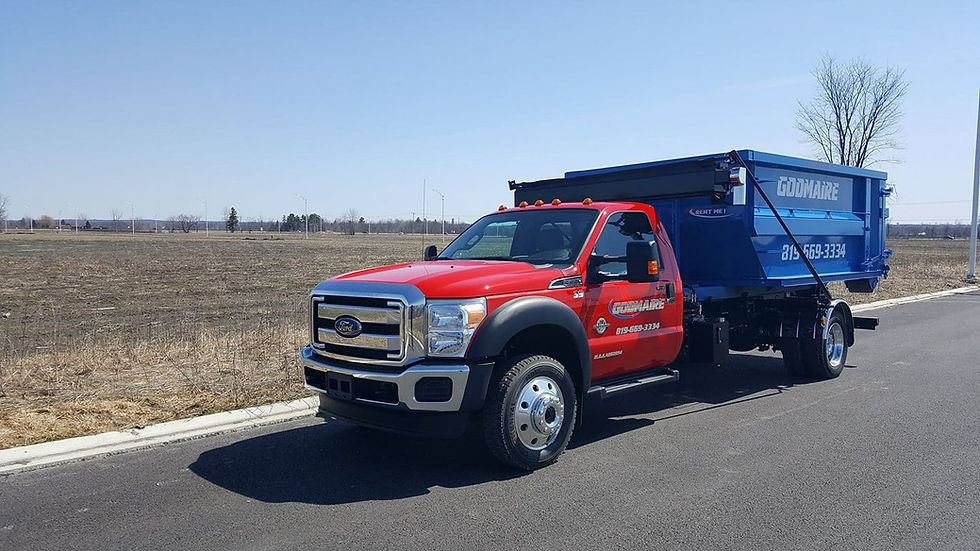
There's a moment that comes around in almost everyone's life: the moment when you look at your basement, your garage, or the family home after years of accumulation and you think, "Okay, something has to be done ." The problem is rarely motivation. It's more often logistics. How do you get rid of all this efficiently without making twenty trips to the recycling center, without cluttering up the yard for weeks, and without feeling guilty about sending everything to landfill?
The answer, in most cases, is renting a container . It's a simple, accessible tool, and often much more economical than you might think. But you still need to choose the right size, know what you can put in it, and understand what happens next. Here's a practical guide to get your next big decluttering, renovation, or cleaning project off to a good start.
Why rent a container instead of making multiple trips?
Before diving into the technical details, let's ask the basic question: why a dumpster? For a small project (emptying a few boxes or getting rid of an old piece of furniture), municipal collection, a thrift store, or a trip to the recycling center is perfectly adequate. But as soon as you're talking about emptying an entire basement, renovating a kitchen, demolishing a deck, clearing out a relative's house, or doing a major estate clean-out, the equation changes quickly. Making 15 trips to the landfill with a borrowed van means: time, gas, a sore back, stains in the vehicle, and a project that stretches into weeks instead of a few days.
A container delivered directly to your home is the opposite: one call, delivery to your door, you fill it at your own pace, and everything is shipped out again in a single transaction. For many of our clients, it also has a significant psychological impact. Seeing the container in the entryway is a tangible motivator. It's there for two weeks, so let's get to work. The project moves forward.
Choosing the right format: the right starting point
This is probably the question we get asked most often on the phone: What size container do I need? Here's a simple way to find out.
The 10-yard container is the most compact. It fits through most standard residential driveways and holds approximately 3 to 4 full pickup truck loads . It's the ideal size for emptying a garage, renovating a single bathroom, or doing a moderate basement cleanout.
The 15-yard container offers a good compromise for medium-sized projects : demolishing a deck, removing an old shed, renovating a bedroom with flooring, or undertaking major landscaping. It is also very well suited for clearing out moderately sized estates.
The 20-yard container is the most popular with our residential customers, and for good reason. It holds a large quantity of materials while remaining reasonably compact. It's the ideal size for major renovations (kitchen and bathroom, for example), roof repairs, or a deep clean of a family home after several decades.
The 40-yard container is designed for complete demolitions, very large clearances, or projects that generate a large volume of light but bulky materials (mattresses, furniture, branches, insulation).
Our advice: if you're hesitating between two sizes, choose the larger one. Paying a little more for extra capacity is almost always cheaper than having to rent a second container because the first one has overflowed.

Why rent a container instead of making multiple trips?
Standard open containers accept a wide variety of common materials in residential projects: furniture and bulky items, renovation materials (wood, gypsum, plaster, flooring), demolition debris (concrete, brick, asphalt), roofing shingles, metal, branches and organic gardening materials, and large quantities of cardboard.
Some materials, however, require specialized treatment and cannot be placed in an open container. This includes paints and liquid solvents, used oils, batteries, propane, chemicals, appliances containing unpurged refrigerants, biomedical waste, and household hazardous materials. These items must be taken to your municipal recycling center; most accept them free of charge.
For large quantities of wet materials (sludge, construction wastewater, saturated soil), specialized watertight containers are available . This service is less common in the region, but we now offer it in 20- and 40-yard sizes, as well as in larger-capacity Frac Tank containers. If your project involves this type of material, please mention it when requesting a quote, and we will guide you toward the appropriate solution.
Where do your materials really go? The journey after collection
It's a question that comes up often, and that's a good thing: But where does everything I put in the container actually go? The honest answer: not directly to landfill, in the vast majority of cases. The materials we collect are transported to approved sorting and recovery centers, where they are separated by category and sent to the appropriate recycling streams.
Specifically, here is what is recovered and reused:
Metals (steel, aluminum, copper) are almost always 100% recycled.
Clean wood is transformed into wood chips, mulch or biofuel.
Concrete, brick and asphalt are crushed and reused as fill or aggregates for new construction projects.
The cardboard and paper return to the recycled pulp production chain.
Clean gypsum can be recycled into new gypsum or used as an agricultural amendment.
The percentage of recovered materials varies depending on the type of load, but it is generally much higher than people imagine. Your efforts matter.
How you can help: A few simple steps can significantly increase the recovery rate. Avoid mixing liquids with dry materials. If possible, separate large pieces of metal and clean wood from treated or painted wood. And above all, do not include any hazardous materials, even in small quantities—a single spilled can of paint can contaminate the entire load and send it straight to landfill.
Our process is simple and clear.
First, you describe your project in a few words. Our team asks you simple questions—type of materials, estimated volume, available space, expected duration—and recommends the appropriate format. This rarely takes more than 5 minutes.
Next, you receive a clear quote , with no hidden fees or fine print. The price you're given over the phone is the price you pay on the invoice.
On the agreed date, our driver will deliver and position the container exactly where you want it, protecting sensitive surfaces (interlocking pavers, freshly laid asphalt) if necessary.
You complete it at your own pace . One day, one week, two weeks — it's up to you. For longer projects, we can arrange a mid-term exchange.
When you're finished, a simple call is all it takes to schedule the collection. We collect the container, and the rest — sorting, transport, recycling — is our business.
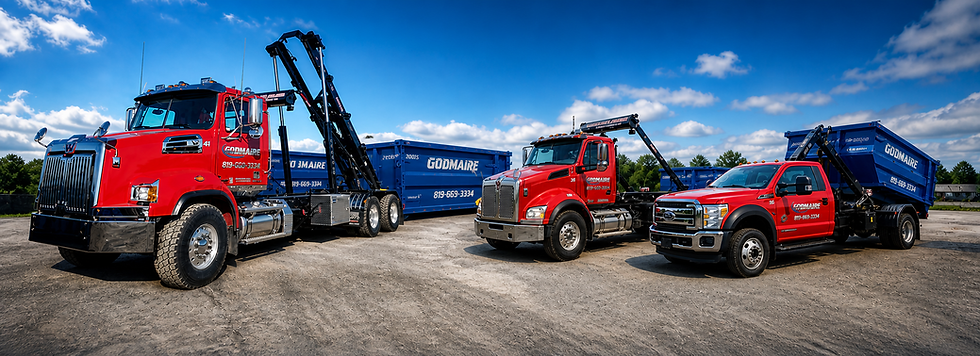
In conclusion
A major decluttering, renovation, or cleaning project doesn't have to be a source of logistical stress. With the right container, delivered to the right place at the right time, you can work at your own pace, finish in a few days what would have taken weeks, and have the satisfaction of knowing your materials are being handled responsibly.
Whether you're in Gatineau, Ottawa, Aylmer, the Outaouais region, or the surrounding area, our local team is there to support you, from choosing the format to the final step. Just one call is all it takes to get started.
Our team will respond quickly with a personalized quote.
📞 (819) 669-3334

